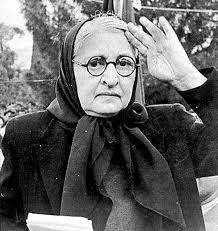
Showing posts with label halide edip adıvar. Show all posts

Sunday, August 8, 2010

Turkish Ordeal'dan alıntılar-Türkçe çeviri

Ben şu yazımda Halide Edib'in Amerika'da yayınlanan anıları Turkish Ordeals'dan alıntılar vermiş, anlamayan olursa Türkçe'ye çeviririm demiştim, istek geldi, ben de görevine sadık bir blog sahibesi olarak çeviriyorum.

Sayfa 80:

"Hayat sinemadan çok da farklı değil. aralarındaki tek fark film izlerken insanın daha çok heyecanlanması." 
Atatürk'ü ilk gördüğü günkü izlenimleri, sayfa 90:

"Onun aklı tıpkı bir lamba gibi iki taraflı. Bazen yanıyor ve göstermek istediğini size kör edici bir keskinlikle gösteriyor, bazen de dolanıyor ve karanlıkta kayboluyor." 

Çerkez Ethem Türk askerlere yardım ettiği için Türk ordusunun koruması altında olan biri hakkında ölüm kararı çıkmasını istiyor. Halide Edib ve İsmet Paşa söz verildiği gibi adamın korunmasını istiyor, ama Atatürk Ethem'i onurlandırmak ve isteğini yerine getirmek istiyor, sayfa 111:

"O (Atatürk) bizim durumumuzda merhamet, acıma ve duygusal ahlakçılık gibi şeylere yer olmadığını; bu sözden dönmek konusunda vicdan yapmanın bir zayıflık belirtisi olduğunu, böyle şeyler düşünen insanların hiçbir zaman kazanma şanslarının olmadığı beyan etti. Düşmanlarımızı dize getirdikten sonra, söz verilmiş olsun olmasın, yapmamız gereken tek şey onları öldürmek; ölüler sorun çıkaramazlar."
"Ancak şu anda bu sözlerin ne kadar belirleyici olduğunu ve kurmayı düşündüğü ve başardığı hükümeti simgelediğini fark edebiliyorum. Yine de o zaman bile onun ne kadar Ethem'e benzediğini, toplumun kaderini değiştiren insanların ne kadar zalim, ilkelce pratik olduğunu ve eski idareleri ne kadar kolay yıkıp bir ülke üzerinde kendi iktidarlarını kurabildiklerini görebilmiştim. Ve her ne kadar Mustafa Kemal Paşa'nın şu anda da yönetiminde devam eden düşünceleri sayısız taraftar bulsa ve bu düşünceler kısa vadede başarı getirse de, uzun zamanda insanlara kendini güvensiz hissettirecek ve ahlak yüzünden olmasa da güvenlik yüzünden insanlar bu düşüncelere karşı ayaklanacaklar."
sayfa 118:

O ilk aylarda ve sonraki yıllarda onunla birlikte yaşadığım kısa kriz anlarında her zaman ayık ve kişilik olarak doğru biriydi. Ve önündeki engelle tamamen baş edebilen biri. Ama insan doğasını izleyen biri,  o zamanlarda, ya da şimdi ki yaşam şeklinde, onun ahlaki olarak anormal biri olduğunu kabul etmek zorundadır. O hiç bir zaman sıradan insan ahlakını kabul etmedi ya da buna gerek olduğunu düşünmedi. Ahlaki ideallerle hareket eden ve bunların ciddi standartlarına sadık kalan insanları ya hocalar gibi ikiyüzlü ya da, eğer gerçekten böyle yaşayan ve bu kurallara uyan bir kaç kişi varsa, deli olarak görüyordu.
"Ama Mustafa Kemal Paşa'nın kişiliğindeki en karakteristik nokta onun kalpsizliğidir. Bu özellik o dönemde planlarını insanı zayıflıklara kapılmadan yerine getirebildiği için ona nüfız sağlamıştı. Ve acıma, şefkat, fedakarlık gibi hisler onun için işlevsiz zayıflıklardı. İnsan hayatının karmaşık planında onun için önemli olan zeka ve kişisel çıkarlardır. Ruhsal ve her günlük çıkarımlarla açıklanamayan her şey onun için önemsizdir. Zeki adam bu zayıflıkları olan diğer insanları kullanır, ama kendisi bu arada materyalist ve kalpsizliğine devam eder. Ama burada da bir paradoks var. Çünkü Mustafa Kemal Paşa batıl inançlıdır.  Kehanetler onu derinden etkiler. Ona bir kahinin yolladığı üstünde Arapça büyü yazıları olan yeşil bir kumaşı masasının arkasındaki duvarda asılı olduğunu hatırlıyorum. Ve sürekli taraftarlarının rüyalarını sorardı. bu taraftarlarda her zaman onun zaferini anlatan güzel rüyalar görmeyi becerirlerdi.
 Komünizm hakkında, sayfa 126:
"... onlar insanları Komünist olanlar ya da olabilecekler ve olmayanlar diye ikiye ayırıyorlardı ve hepsi için ayrı yargı kuralları vardı. Burada yeni bir sınıf ayrımı, yeni bir yargı, yeni bir engel dağıyordu: belki ırk ya da din ayrımı gibi değil, ama yine de bir engel."
Kemalistleri epey kızdıracak bir bölüm, sayfa 129:

"Canlı bir insan değildi. Ve onu hükmedici bir figür haline getiren de en çok bu özelliğidir. Sokaktan kurnaz, bencil ve ilkesiz herhangi bir insanı alın, ona bitmez tükenmez isteklerini yerine getirmek için her türlü kötülüğe başvurabilecek histerik bir kadının yapmacıklığını ve ısrarcılığını ver, ve ona bulabildiğin en büyük büyüteçle bak, Mustafa Kemal Paşa'yı görürsün."
Atatürk'le ilk kavgaları, sayfa 130:
Bu konuda o kadar kesindi ki, sadece olayı canlı olarak hatırlamakla kalmıyorum ama söylediği her şeyi kelimesi kelimesine hatırlıyorum. Bu sefer hayatının nedeni açıkça ortadaydı ve söylediği şey, son derecede basit bir şekilde söylemek istediği şeydi.  
"Söylemek istediğim şu: Herkesin benim istediğim ve emrettiğim gibi davranmasını istiyorum." "Zaten söylediğiniz esas her şeyi Türk Halkı'nın iyiliği için yapmadılar mı?". Sorumu geçiştirdi ve aynı acımasız dürüstlüğüyle devam etti. "Ben herhangi bir değerlendirme, eleştiri ya da öneri istemiyorum. Sadece kendi istediğim şekilde davranırım. Herşey emrettiğim gibi gitmeli"
 "Ben de mi Paşam?" "Sen de". Sonsuz dürüstlüğü eşit derecede bir dürüstlüğü hak ediyordu. "Amacımıza hizmet ettiğini düşündüğüm sürece size itaat eder ve istediğinizi yaparım" "Her zaman bana itaat etmeli ve istediğimi yapmalısın" durumu göz ardı ederek sözlerini böyle tekrarladı. "Bu bir tehdit midir Paşam?" diye sordum sakince ama kesin bir şekilde. "Özür dilerim", dedi, "Sizi asla tehdit etmem".
sayfa 217:

" Mustafa Kemal Paşa, daimi ve körcesine parlak bir zekası olmasına rağmen, karakterinde ve huyunda eğer İsmet Paşa ve Fevzi Paşa bunları dengelemese davamız için ölümcül olabilecek hatalara sahipti. Mustafa Kemal Paşa sert ve kişisel sınıflandırmalar konusunda çok kıskanç biriydi. Kadere etki eden çoğu insan gibi, kendisine dokunmayan bir alanda bile olsa kimsenin toplumsal olarak dikkat çekmesini istemiyordu: Bu his o kadar güçlü bir kırgınlık haline geldi ki, kendini yeterince güçlü hissetttiği anda bu bir kıyıcılığa dönüştü. 
Cephede, sayfa 223:
"Cephede savaş oyununu oynandığı gibi görürken, içimdeki canavar, sonradan hastanelerde sonucun ne olacağını unutup bundan herkes kadar çok zevk alıyordu. İnsanların gittikçe daha yakına geldiğini görebiliyordum, ve ön sırada düşen ve kırılmış olarak orada kalanların düşüşünü ve tüfeklerle parçalanmasını görebiliyordum. Tıpkı karıncaların yuvalarının yakınındaki küçük sarı tepelerdeki yürüyüşlerine çıkıyorlarmış gibi. Onların dumanın ardından tekrar ayağa kalkamayacaklarını fark ettiğimizde gözümüzü gerçeğe açıp bu aptal ve sakar ölüm oyununa lanet ediyorduk, devam edemeyenler için üzülüyordum."
Kitaptaki en sevdiğim bölüm, cephedeki bir subay bir yabancı gazeteciye emri altında bir kadın ulaşım elemanı olduğu için övünmesi ve bu kadının hisleri, sayfa 241-242:
"Ah kızım", dedi, "Silahlardan nefret ediyorum. birine dokunduğumda bir yaprak gibi titriyorum. Benim silahlarla ne işim olur ki? Ben askerleri seviyorum ve onlara hizmet etmek istiyorum. Niye benim silahla fotoğrafımı çekmeleri gerekiyor? Nasıl olsa çekerlerken titreyip duruyorum, yavrum, komutan her konuştuğumda dizlerim titriyor..."
"Sana karşı kötüler mi, anacığım?"
"Hayır, hayır, ama beni sanki eğlencelik bir şeymişim gibi her konuğa gösteriyorlar. Ben daha çok komutanın yardımcısı beyaz sakallı yaşlı adamdan korkuyorum. Konuştuğunda bağırıyor, yanında bir kamçı taşıyor ve onunla askerlere vuruyor. Bu günlerde asker kaçaklarını çok hırpalıyorlar... zavallı kuzucuklar, kalbim onlar için kan ağlıyor. Hiç bir şey iyilikle yapılmıyor. Selçuk ne zamandüşmandan temizlenecek? Bu kampta korkudan başka hiç birşey yok. Bunlara askerlerin ve körleşmiş ülkemin hatrına katlanmak zorundayım."
sayfa 261:

"Sultanların kutsal gücü vardı- ve artık çürümüştü: biz güçlü insanların efsanesini yaratacağız, soyla değil kabiliyetle hükmedenlerin efsanesini. Doğal olarak Güney Amerika cumhuriyetlerinde görünen türden bir hükümet şekline yöneliyorduk- değişken ve güçlü insanlara bağımlı bir hükümet: 'General X tahta, o zaman General Z dağlarda olmalı' türünden bir şey. Sultanlar öldü, çok yaşasın paşalar." 
İzmir zaferinden sonra, sayfa 270-271:

Ne kadar zor günlerden geçtiğimiz düşünüldüğünde, Mustafa Kemal Paşa'nın coşkulu sevincini görmek neredeyse dokunaklıydı.
"İzmir'i aldıktan sonra dinlenirsiniz, Paşam, çok mücadele ettiniz." "Dinlenmek mi, ne dinlenmesi? Yunanlardan sonra birbirimizle savaşacağız, birbirimizi yiyeceğiz"
"Neden?" diye sordum. "Yeniden yapılanma için yapmamız gereken çok şey var."
"Ya bana karşı çıkanlar ne olacak?" "Ama bu bir ulusal mecliste doğal bir şeydir". Şakacı bir ses tonuyla konuşuyordu, ama ikinci gruptaki (dönemin muhalefet partisi) isimlerden bahsederken gözleri tehlikeli bir şekilde parlıyordu. "Onları halka linç ettireceğim. Hayır, dinlenmeyeceğiz, birbirimizi öldüreceğiz."
"Bu sözler onun huyunu açıklayıcı sözlerdi. O birşeyler yapmalıydı, dünyayı şaşkına çeviren eşsiz bir oyuncu olarak sahnede olmalıydı- başkaları ve kendisi için tehlikeli bir oyuncu. İzleyicilerin hissedebileceği her şeyi vermeliydi -korku, merak, hayranlık. Ve sahnede kendisi dışında yalnızca gölgeler olmalıydı, kendi isteğiyle çağrılan ve geri gönderilen gölgeler, sadece gösteriyi gösteri yapmak için- daha fazlası için değil. Belki de o kadere hükmeden ve özelliği entellektüel başarıda değil tahtlar ve güçlerde olan diğer adamlardan o kadar da farklı değildi. O anda garip bir şekilde Yeşaya'nın Tanrı tanımlamasını aklıma getirdi, yükselen hiç bir şeye katlanamayan bir Tanrı, bu insanlar, ağaçlar ya da dağlar olsa da".
İzmir zaferinden sonra, Yunanlıların Türklere yaptığı gibi, Türk askerlerlerinin topraklarımızda kalan Hristiyan kadınlarına taciz etmesini isteyen Anadolulu kadınlar üzerine, sayfa 276:

"Yaralarının zamanla iyileşemeyeceğini hissediyorum; onların üzerinde kuluçkaya yatacaklar, aynı tutkulu şekilde onları inceleyecekler. evet, bu ruh hali kesinlikle Batı'nın sabitliği ve kinciliği; bu Doğu ruhunun olgunluğunu, göze çarpmayan anlayış ve bağışlayıcılığına sahip değil. Bu kadınlar Batının çok uzun süredir Doğuya öğretmek istediği çirkin nefret dersini öğrenmişlerdi. 


Biraz hızlıca çalakalem bir çeviri oldu, ama umarım işe yarar.

Friday, June 18, 2010

Okuduğum Kitaplar Listesi- 2010/ Books I read list 2010- Update

Mayıs/May

Ecce Homo- Friedrich Nietzsche

Northanger Abbey- Jane Austen: Yorumum burada

                                                          You can read the full review here

Öte Yer-Sadık Yemni: Sarp'ın maceralarının ikinci kitabında bu sefer karşımızda 18 yaşında çıtır (!) bir Sarp, ilk cinsel uyanışlar, CIA ajanları ve yine "öte yer"le ilgili bir hikaye var. Tabii ki yine çok eğlenceli ve bir solukta okunuyor.

Turkish Ordeal- Halide Edib Adıvar: Yorumum ve kitabın tamamını indirmek için buraya
                                                                 You can read my review and download the whole book here

ŞİMDİYE KADAR OKUNAN KİTAP SAYISI/ BOOKS READ SO FAR: 16  

Saturday, May 29, 2010

Turkish Ordeal- Halide Edib Adıvar

 Daha önce şu yazıda yazmıştım Halide Edib'in 'Turkish Ordeal'ı hakkında. Amerika'da yaşadığı yıllarda yazdığı anılarının ikinci kısmı olan 'Turkish Ordeal', tekrar altını çizerek söylüyorum ki, bir çok insanın sandığı gibi Ateşten Gömlek'in İngilizcesi değil, 'Ateşten Gömlek'ten önce İngilizce yazılmış bir kitap. Adıvar daha sonra Türkiye'ye döndüğünde önce Mor Salkımlı Ev, ardından da 'Ateşten Gömlek'i yazıyor, ama bunlar 'Memoirs' ve 'Turkish Ordeal'ın Türkçe çevirileri değil, yeniden yazılmışlar. 'Turkish Ordeal' sanıyorum ki özellikle Atatürk'le ilgili ifadeleri nedeniyle bir süre Türkiye'de yasaklanmış, şu anda da bir baskısı yok.

I wrote before about Halide Edib Adıvar's Turkish Ordeal here.It's the further memoirs of Halide Edib and contrary to the general belief, it is not the translation of 'The Shirt of Flame', and is originally written in English, 'The Shirt of Flame' is written after she returned to Turkey and it's not a translation into Turkish. (A bit confusing I know, in short she wrote two sets of memoirs, one in English, one in Turkish). 'Turkish Ordeal' is considered to be harsher in tone about Ataturk and was banend from Turkey for sometime. As the publishing house was closed, there is no copy of the book today, neither in U.S.A. or in Turkey.


Benim gibi Halide Edib'e hayran bir insan için onun anılarını okumak tabii ki etkileyici, özellikle Sultanahmet Mitingi'ne niye Halide Edib'in seçildiğini ve onun nasıl erkek hakim Osmanlı Devleti'nde önemli bir siyasi figür haline geldiğini bu kitapla daha net olarak öğrenebildim. Bunun yanında Atatürk dahil askerlerin ve siyasi figürlerin ona olan saygısı ve ona gösterdikleri özene hayran kaldım. Bu özen o kadar büyük ki, komutanlar meclisin ilk açıldığı yıllarda köpeği ölünce depresyona giren Halide Edib'e yeni bir köpek bulmak için yarışa girip kimin köpeğini seçeceğini bir onur meselesi haline getirmişler.

For a person who admires Halide Edib, reading her memoirs is of course amazing, especially to learn how she came to be the speaker in the Sultanahmet demonstration and how come she could become such an important political figure in a patriarchal Ottoman Empire. Beside that, the fact that Ataturk and all the soldiers respect her so much and take such a good care of her in the military was very interesting to read. This 'taking care' was done in such a delicate manner that she never felt as a weak woman, but rather almost a divine figure. In Ankara, the time when the first assembly was opened, Halide Edib was in depression because her dog died, and all the soldiers around raced to find her a new dog, for example.

Ama kitabın en önemli yönü Halide Edib'in Atatürk'ün kişiliğini, bugün Kemalizm'in bizi zorladığı ikonlaştırıcı şekilden uzak olarak öğrenme çabası, Atatürk'ün yanında olduğu süre boyunca onu gerçekten incelemiş ve işte bu incelemeler kitabın en önemli noktası. Halide Edib'in Atatürk'ünün en büyük özelliği kazanmak için herşeyi yapmaya hazır olması, bu Kemalist'lerin söyleyeceği gibi kendi hayatını bile feda etmeye hazır olması anlamına geliyor, ama aynı zamanda da kazanmak için kim olduğuna bakmadan herkesin ayağını kaydırabileceği ve herkesi kullanabileceği anlamına da geliyor. Halide Edib'i gerçekten endişelendiren başka bir nokta ise, Mustafa Kemal'in totaliterliği, evet Atatürk padişah, halifelik gibi güçler ve semboller peşinde değil, ama sıra karar vermeye gelince sözün tek kendisinde olmasını istiyor. Daha da kötüsü, alternatif görüşlere hiç tahammülü yok. Aşağıda zaten verdiğim alıntılarda Halide Edib'in bu çıkarımlarını okuyacaksınız.

But the most important part of the book is the way she tries to learn Ataturk's true personality, liberated from the iconic image that Kemalists. She observed him all the time she spent with him and these observations are the most interesting parts of the book. The biggest characteristic according to Halide Edib is that Ataturk can sacrifice everything for victory. And even though it means that he could sacrifice even his life, which a Kemalist would tell you, it also means that he can do every trick and ruse in order to succeed. Another part of his ideology that scares her the most is his totalitarian views. Yes, rejecting the Sultan and Chaliph (head of Muslims) titles he was not after power, but when it comes to making decisions, he wanted his to be the only-one. You can read more of these observations in the quotes that I took from the book below. 


Halide Edib'le Atatürk'ün arasındaki en büyük fark, Halide Edib'in büyük bir hümanist olması ve adalet kavramına inancı, yine de Atatürk'le aralarında bir kaç konuşma geçse de, Atatürk'ün Halide Edib'e her zaman saygı ve sevgi gösterdiğini de burada belirtmek lazım. Ayrıca Halide Edib, Atatürk'ü anlatırken kesinlikle sadece kötü yanları ortaya koymuyor, iyi yönlerini övmekten hiç bir zaman çekinmiyor.Halide Edib'in anlattığı Atatürk bana daha mantıklı geliyor, çünkü dünyanın en büyük güçleri tarafından ele geçirilmiş bir ülkeyi kurtarmaya çalışan birinin, bize öğretildiği gibi sevecen ve duygusal biri değil, tam tersine büyük bir egosu olan ve neredeyse mekanik bir insan olması gerekir. Ya da ben böyle düşünüyorum...

The biggest difference between Ataturk and Halide Edib is her humanism and her belief of justice that she mentioned all the time in her speeches and in the book, but despite some quarrels, Ataturk was always very respectful of her. Also, Halide Edib doesn't always criticize Ataturk, but puts his qualities in focus too, so this book really does a good job in portraying a really important man of the history. For me, the Ataturk that Halide Edib makes more sense, because for someone to uprise against all the powerful forces of Europe in a enslaved fallen empire, he has to be with a big ego and almost a mechanic person, rather than an emotional and affectionate person like the Kemalist says him to be.

Gelelim alıntılara, alıntılar sadece Atatürk'le ilgili değil, kitabın en sevdiğim parçaları sadece (Türkçe'ye çevirmiyorum, ama İngilizcesini anlayamayan biri olursa söylesin çevireyim):

Here are my favorite passages from the book:

 page 80:
"Life is not so very different from the cinema after all. The only difference is that one gets more excited at the movies."
 Her first impression from the first time she saw Atatürk, page 90:

"His mind is two-sided, like a light lantern. Sometimes it flashes and shows you what it wants you to see with almost blinding clearness; sometimes it wanders and gets itself lost in the dark."

Edhem, the most important leader of the irregular forces wanted a death sentence on someone who the Turkish Army sworn to protect in return of his helps to one of the Turkish soldiers. Halide Edib and İsmet Pasha wanted him protected as promised, but Atatürk wanted to grant Edhem's wish in order to honor him, page 111:

"He openly avowed that in our condition there was no place for mercy, pity, and sentimental morality; that scruples about breaking a promise were a sign of weakness; that any who indulged in such considerations were bound never to succeed. Once we got hold of our enemies, there was one thing to do, promise or no promise, and that was to kill them; dead men can’t cause trouble."
"It is only now that I realize how significant his words were, and how they symbolized the government he then meant to set up and which he has since succeeded in establishing. But even then I could not help seeing how much like Edhem he was, and how ruthless and primitively practical are these men of destiny who upset old dispensations and impose their own order on a nation. And although Mustafa Kemal Pasha’s ideas, which still dominate his administration, have numberless supporters all over the world, I still believe that they represent only a short-sighted, expediency which, though it may make for immediate success, in the long run will make men feel so unsafe that they will rebel against it for the sake of security if not for the sake of morality."
page 118:

"Mustafa Kemal Pasha during all those first months, and during those brief periods of crisis when I worked near him in later years, was never other than sober and correct in his person. And entirely occupied dealing with the situation at hand. But a student of human nature observing him then, or in his present mode of life, is obliged to admit that he must be considered as one of those human beings who are abnormal morally. Immoral he certainly was not; he was merely amoral. He never accepted the current standard of human morality, or saw its necessity. Those people who professed moral ideals or claimed to adhere to austere standards were to him either hypocrites like the hodjas or, if there were a few who were genuine and consistent, them they were just fools."
"But perhaps the most characteristic element in Mustafa Kemal Pasha’s make-up was his complete lack of heart. At that time it gave him an ascendancy, for he could work out his plans untroubled by human weaknesses. And pity, affection, sacrifice were to him useless weaknesses. Intelligence and self-interest were what mattered in the intricate scheme of human life. Nothing spiritual, nothing which could not be explained by the everyday intelligence, was worth considering. The intelligent man uses other people who have these weaknesses, but he himself remains an absolute materialist and a heartless one at that. But here again a paradox. Mustafa Kemal Pasha was superstitious. He was deeply affected by omens. I remember a green cloth of Arabic inscriptions of magic a clairvoyant sent him which he had hung against the wall behind the desk. And he was constantly telling of the dreams of his followers. And his followers always managed to have good dreams, dreams which foretold his success."
On Communism, page 126:

"...that hey seemed to divide all men into those who were Communists or likely to become Communists and those who were not, and that they had a different standard of judgment for each. Here was a new class division, a new judgment, a new barrier: not one of race or religion, perhaps, but still a barrier all the same.
One passage that will make the Kemalists very angry, page 129:

"In terms of vitality, he wasn’t. And it was this alone that made him the dominant figure. Take any man from the street who is shrewd, selfish, and utterly unscrupulous, give him the insistence and histrionics of a hysterical woman who is willing to employ any wile to satisfy her inexhaustible desires, then view him through the largest magnifying glass you can find – and you’ll see Mustafa Kemal Pasha."
Their first quarrel, page 130:

Then he was dazzlingly clear that I remember vividly not only the sense of what he said but the very words that he used. For once his life-motive was apparent without concealment, and he said what he really meant with the utmost simplicity.
cause?”
“What I mean is this: I want everyone to do as I wish and command.” “Have they not done so already in everything that is fundamental and for the good of the Turkish
He swept my question aside and continued in the same brutally frank manner.
“I don’t want any consideration, criticism, or advice. I will have only my own way. All shall do as I command.”
“Me too, Pasham?” “You too.” His absolute sincerity deserved a reciprocal frankness. “I will obey you and do as you wish as long as I believe that you are serving the cause.” “You shall obey me and do as I wish,” he repeated, ignoring the condition. “Is that a threat, Pasham?” I asked quietly but firmly. “I am sorry,” he said; “I would not threaten you.”
page 217:

"Mustafa Kemal Pasha, though a blindingly brilliant perpetual motion of intelligence, had drawbacks in his character and temperament which might have proved fatal to our cause if Ismet Pasha and Fevzi Pasha had not been there to counterbalance them. Mustafa Kemal Pasha was harsh and extremely jealous of personal distinctions. Like most men of destiny, he hated to see any one in the public eye, even in a sphere which did not touch his: this feeling became with him a fierce resentment which took the shape of persecution the moment he felt himself strong enough."
On the war field, page 223:

"Through the field-glass I was seeing the game of war as it is played, and the beast in me was enjoying it as much as the rest, forgetting what its results would look like in the hospitals later on. I could see men coming nearer and nearer, and even the fall of the men in the front line, leaving it indented and broken; and the final onslaught with bayonets. Thus the ants take their exercises around the small yellow mounds of their nests. Until I realized that those who could not rise after the smoke had cleared away had had their eyes opened to reality and were scorning this clumsy, stupid game of death, I was feeling sorry for them for not having been able to continue." 

In the war-front, a major bragging to journalists about having a woman transport, and the woman's feelings- one of my favorite passages from the book, page 241-242:

"Through the field-glass I was seeing the game of war as it is played, and the beast in me was enjoying it as much as the rest, forgetting what its results would look like in the hospitals later on. I could see men coming nearer and nearer, and even the fall of the men in the front line, leaving it indented and broken; and the final onslaught with bayonets. Thus the ants take their exercises around the small yellow mounds of their nests. Until I realized that those who could not rise after the smoke had cleared away had had their eyes opened to reality and were scorning this clumsy, stupid game of death, I was feeling sorry for them for not having been able to continue."
“Oh, daughter,” she said, “I hate guns. I tremble like a leaf when I touch one. What have I to do with guns? I love the soldiers and I want to serve them. Why should they take my picture with it? I am trembling all the time anyway, my child: whenever the commander speaks, my knees give way . . . .”
“Is he unkind to you, Mother?”
“No, no, but he shows me to every passing visitor as if I were an amusement [show]. I am more afraid of the old man with the baggy white beard, the commander’s second. He shouts when he speaks, he carries a whip and strikes the soldiers with it. They do flog the deserters so badly . . . the poor lambs; my heart weeps blood for them. Nothing is done by beauty [kindness]. When do you think Seughud will be cleared? There is nothing but fear in this camp. I have to bear it for the sake of the soldiers and for my blind lad.”
page 261:

"The sultans had divine power—it was rotten: we will create the legend of the powerful man, the man who rules by might, not by heredity. We are naturally drifting toward a kind of government such as we see in the South American republics—unstable and only dependent on strong men: ‘General X. is on the throne, hence General Z. must be on the mountains’ sort of thing. The sultans have passed away, long live the pashas.”
After the Smyrna victory, page 270-271:

Thinking of all that he had gone through in the hard days, it was almost touching to see Mustafa Kemal Pasha’s exuberant joy.
“After you take Smyrna, Pasha, you will rest, you have struggled so hard.” “Rest; what rest? After the Greeks we will fight each other, we will eat each other.”
“Why should we?” I said. “There will be an enormous amount to do in the way of reconstruction.”
“What about the men who have opposed me?” “Well, it was natural in a National Assembly.” He had been talking in a bantering tone, but now his eyes sparkled dangerously as he mentioned
the names of two men1 from the second group (the name of the opposition party in those days). “I will have those lynched by the people. No, we will not rest, we will kill each other.”
"These words are the key to his temperament. There must be something doing—he must be on the stage, a unique actor perpetually astonishing the world—a dangerous kind of actor, but dangerous for others and safe for himself. He must be exacting all that the spectators can give—fear, wonder, adoration. And he would have only shadows on the stage, shadows called or sent back at his will, simply to make the show showy—no more. Perhaps he was not so very different from the other men of destiny whose specialty was thrones, power, rather than intellectual achievement. He made me think strangely at this moment of Isaiah’s description of God, a God who will not bear any uplifting of heads, be they of men, trees or mountains "
After the Smyrna victory, on Anatolian women who want the Turkish soldier to harrass the Christian women in Turkish lands, like Greeks has done to Turkish, page 276:

"I felt that their wounds would never be healed with time; they would brood over them, they would probe them ever in the same passionate way. Yes, this mood was absolutely Western in its fixedness and its vindictiveness; it lacked the mellowness, the subtle understanding and forgiveness of the real Eastern soul. These women had learned the lesson of ugly hatred which the West had been trying so hard to teach the East."


**Kitabın tümünü buradan indirebilirsiniz.

**You can download the whole book in here.

Tuesday, May 11, 2010

Halide Edip Adıvar


Pazar günü Habertürk Gazetesi'nin pazar ekinde bir yazı vardı, "Biyografisine sığmayan kadın: Halide" ile ilgili. Bu arada, benim hiç bilmediğim bir kitabından da bahsediliyordu, Amerika'dayken İngilizce olarak yazdığı bir otobiyografi imiş, ve burada Atatürk'le ilgili düşüncelerini, hiç de saklamadan yazmış diye. Kitabın adını hatırlayamadım, internette aradım taradım, sanki hiç yazılmamış o kitap, hiç çıkmıyor aramalarda.

I recently read in a newspaper about Halide Edib Adıvar, one of the few important figures of the Turkish Independence War, perhaps the first Turkish feminist, writer, academic and congresswoman. It mentioned a book of her that I never heard of, an autobiography that she wrote in English when she lived in the U.S.A. I couldn't remember the name later and didn't find anything on google. It was as the book never existed.

Tam vazgeçmiştim aramaktan ki, facebook sağolsun, Leslie imdadıma yetişti:) Kitabın adı "The Turkish Ordeal" efendim. Kitap hakkında Türkler çok bir şey bilmemekle birlikte, yanlış kanılara da sahipler. Kitap, bir çoğunun düşündüğü gibi 'Türkün Ateşle İmtihanı"nın İngilizcesi değil. Halide Edip bu kitabı, Amerika'dayken bizzat İngilizce yazmış, daha sonra Türkiye'ye döndüğünde de 'Türkün Ateşle İmtihanı" ve 'Mor Salkımlı Ev' diye iki otobiyografi yazmış, bunlar 'The Turkish Ordeal'ın Türkçe'ye çevirisi değiller. (Türkün Ateşle İmtihanı daha sonra İngilizce'ye 'House of Wisteria' olarak çevrilmiş diyor wikipedia). Aralarındaki farkı kitabı okumayı bitirdiğimde daha iyi anlatabilirim, ama ilk bakışta göze çarpan fark, 'The Turkish Ordeal'ın konuşma dilinde ve diyalogları aktararak, 'Türkün Ateşle İmtihanı'nın ise, daha kurgusal anlatı tarzında olması.

Just when I was about to give up, thanks to facebook,  Leslie came to my rescue. The book is called "The Turkish Ordeal" and is not the same book as 'House of Wisteria' as many sites believe. I cannot really tell the differences between them without reading it first, but at first glance, I can say that she wrote her feelings and thoughts about Ataturk more openly in 'The Turkish Ordeal', and that it has a more spoken-style with dialogue, when 'House of Wisteria' is more formal like a novel.

Öğrenebildiğim diğer bilgi de, 'The Turkish Ordeal'ın bir süre Türkiye'de yasaklanmış olması, şu anda da, yayınevi kapandığından baskısı yok. Ama süper arkadaşım Leslie sayesinde kitabın tümünü şuradan indirebilirsiniz:) (Çok süper arkadaşlarım var hakikaten)

Unfortunately, the book is out of print as the publisher house is closed years ago, but thanks to Leslie, you can download the full book from here .(I do have great friends indeed)

LinkWithin

Related Posts with Thumbnails